Tree Frogs
There are several species of tree frogs in the Virgin Islands. Their calls (mixed with those of insects) provide a musical background to the night, especially after an early evening rain shower. Male frogs call to attract females for mating.
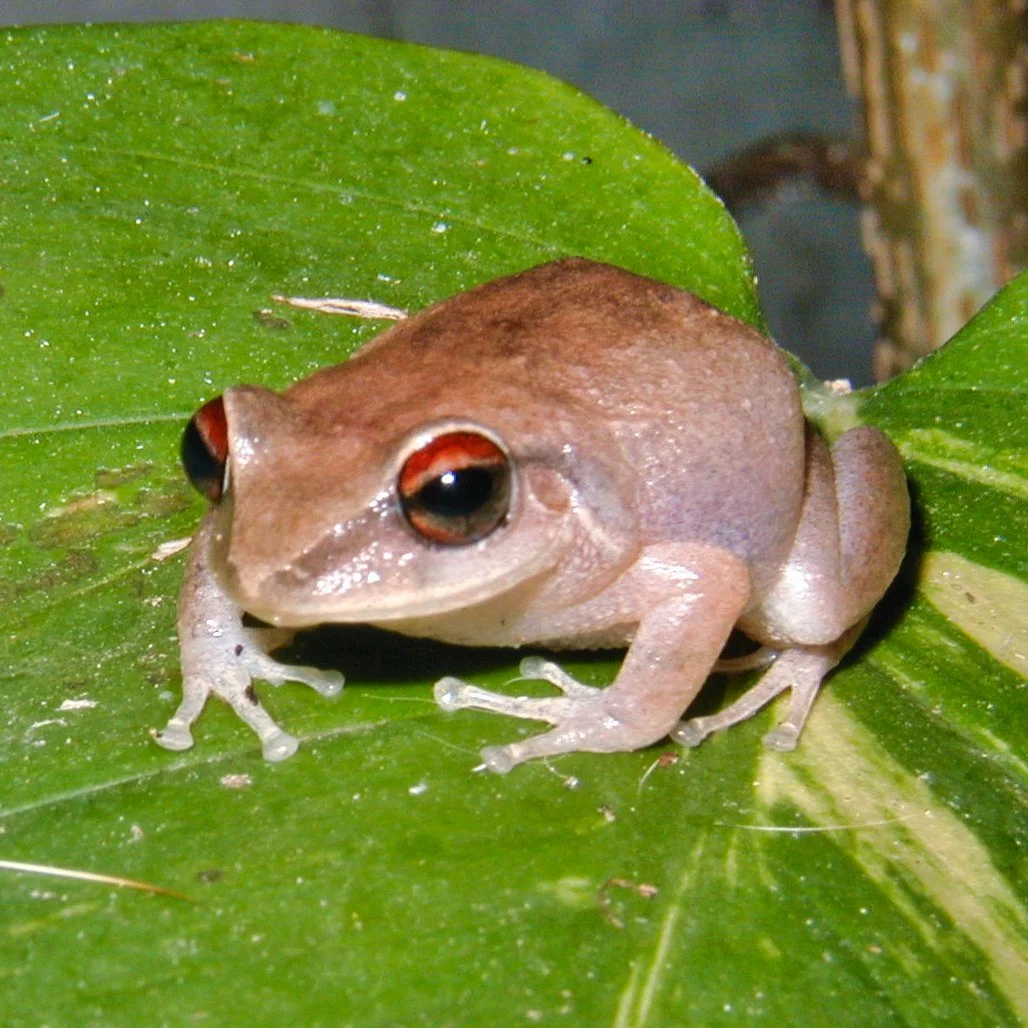
Red-Eyed Coqui (Eleutherodactylus antillensis)
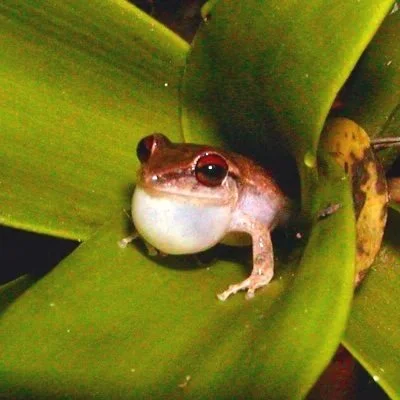
Red-Eyed Coqui (E. antillensis) extending throat while chirping
Eggs are deposited in moist, protected areas or small accumulations of standing water in and around plants. In at least one species (E. coqui), the male will help keep the eggs moist and guard them from predators.
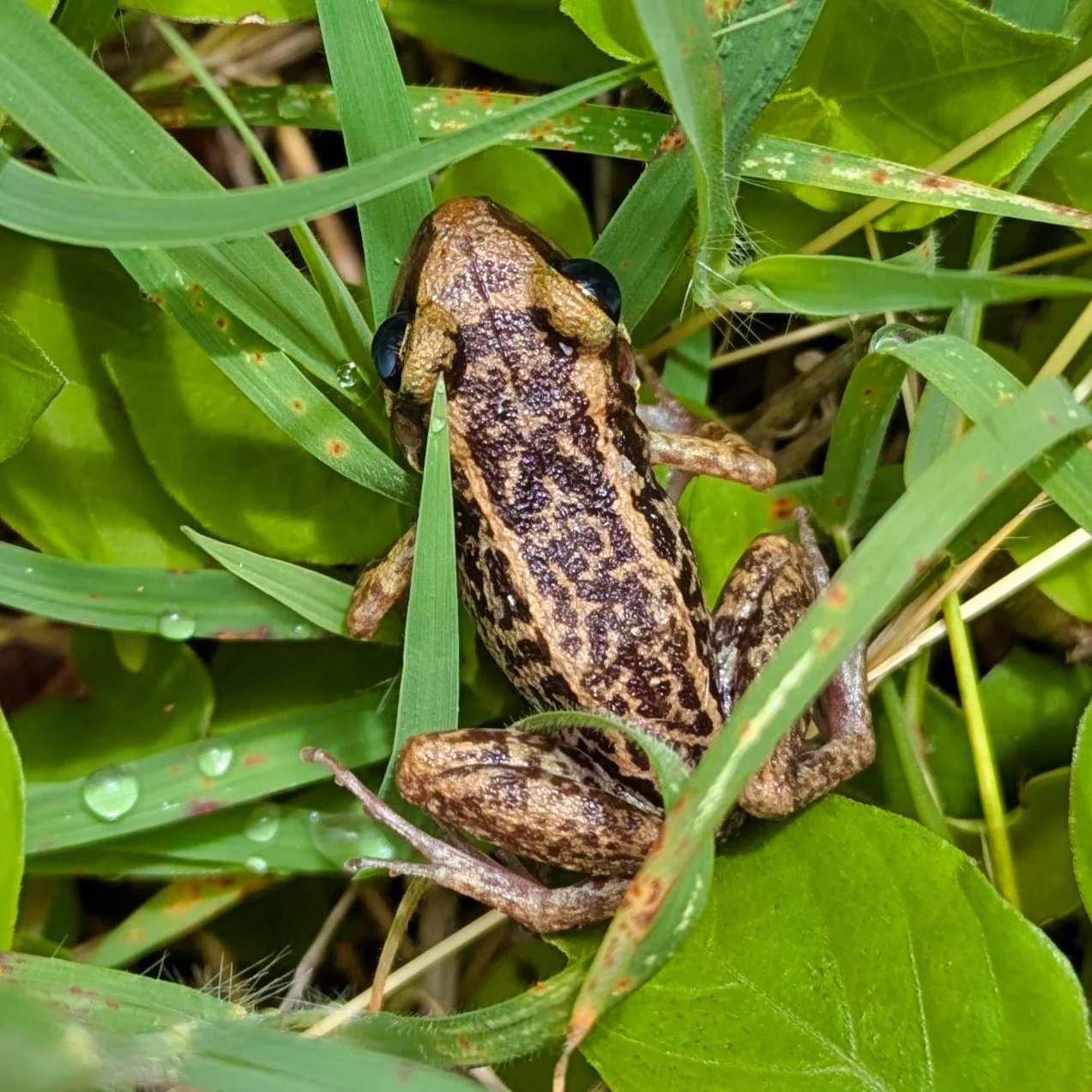
Yellow Mottled Coqui (E. lentus)
Photo: S. Smollett
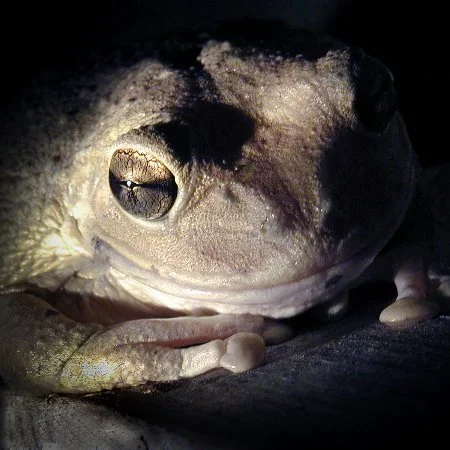
Cuban Tree Frog (Osteopilus septentrionalis)
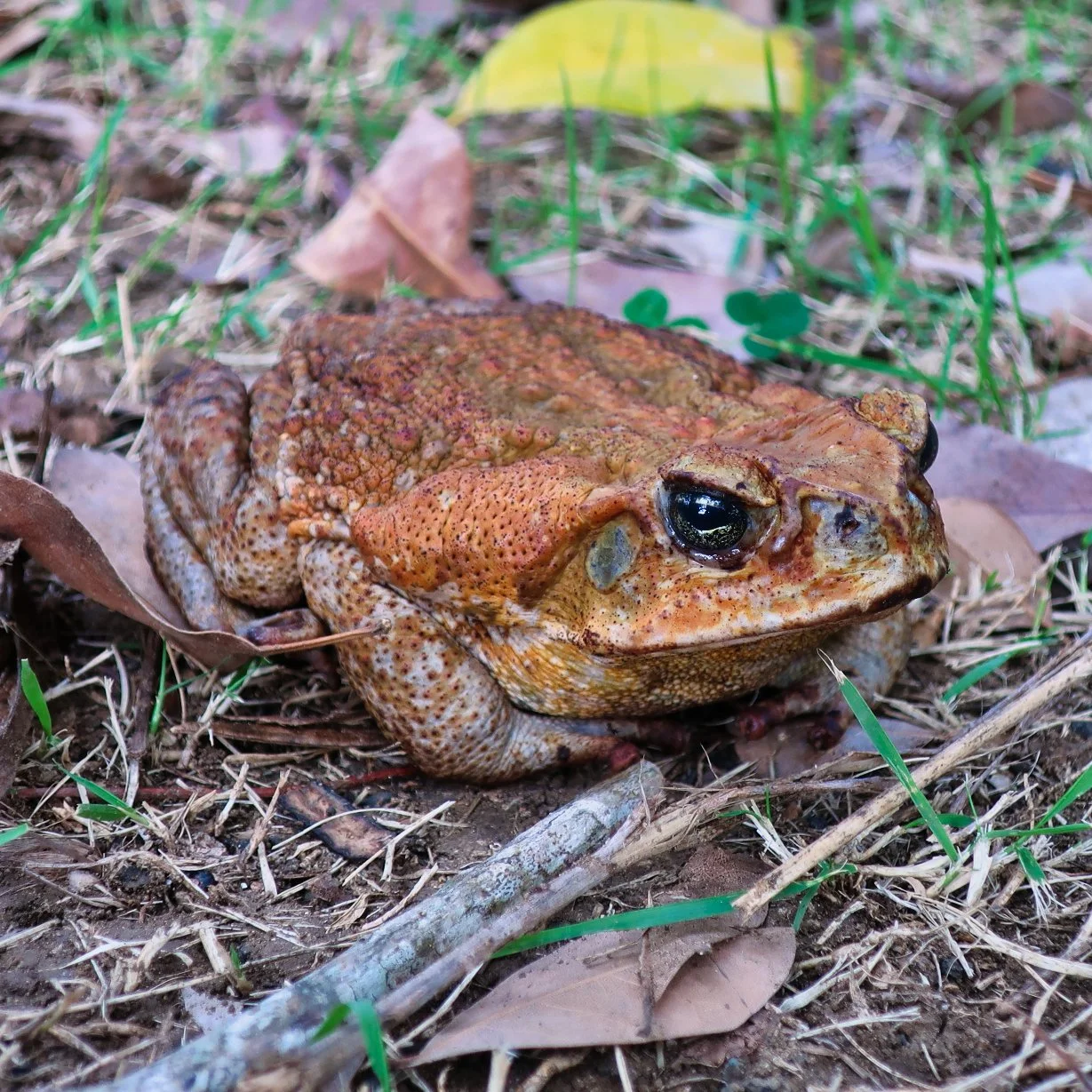
Cane Toad (Rhinella marina)
Reaching a body length of up to ten inches and a weight of up to two pounds, the cane toad is one of the largest toads in the world. They are voracious eaters that feed mainly on insects, but include a wide range of foods in their diets - eating just about anything that will fit in their mouths.
Native to South and Central America, cane toads have been introduced to many regions throughout the world as a means to control agricultural pests, such as white grubs in sugarcane fields.
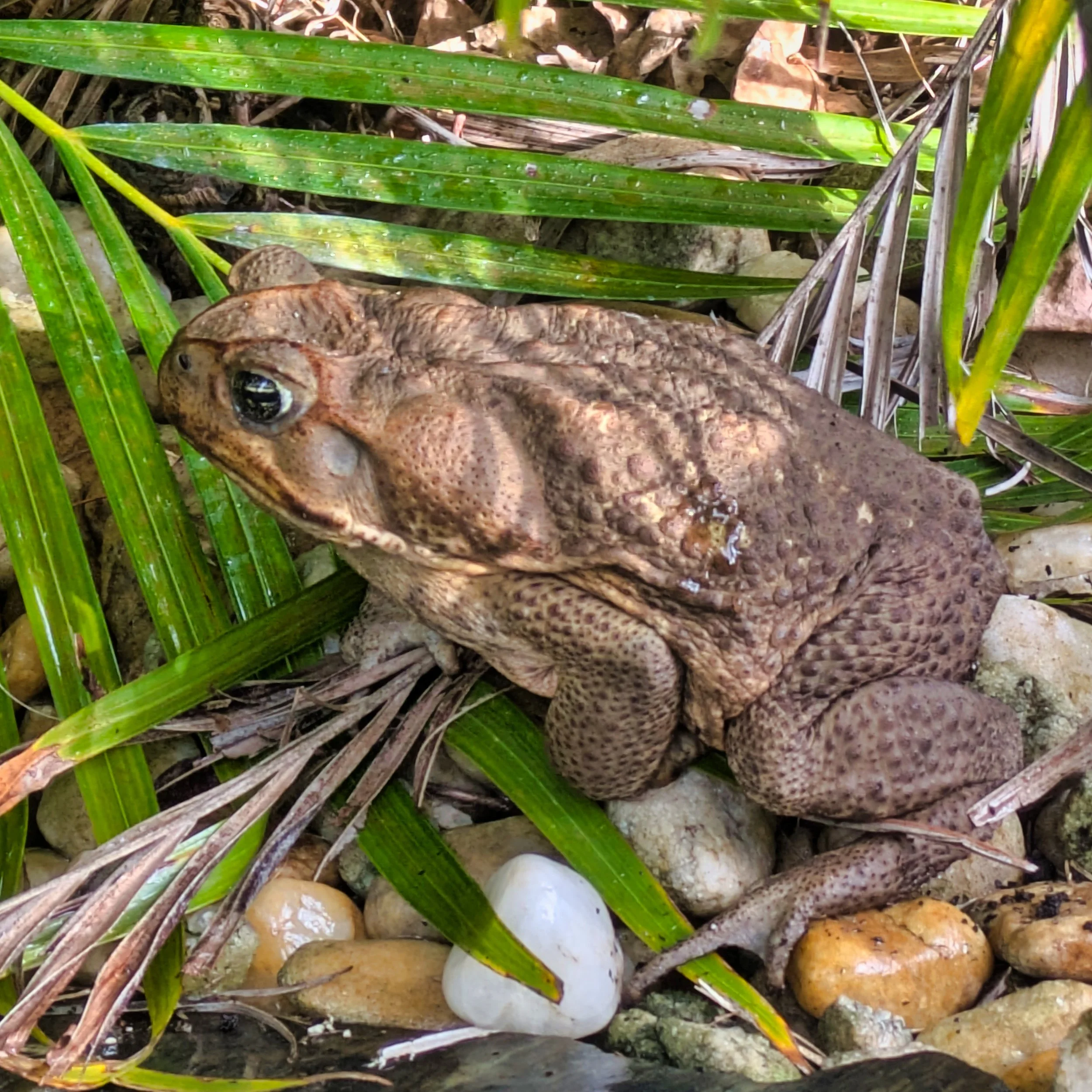
Photo: S. Smollett
The large glands behind their eyes produce a toxin to deter predators. Since this toxin is also dangerous to humans, care should be taken if handling these toads.
Other names for the cane toad are giant toad, marine toad, sugarcane toad, crapaud and kwappo.